
Tangs · Acanthuridae
Care levelExpert
Blue Hippo Tang
Paracanthurus hepatus
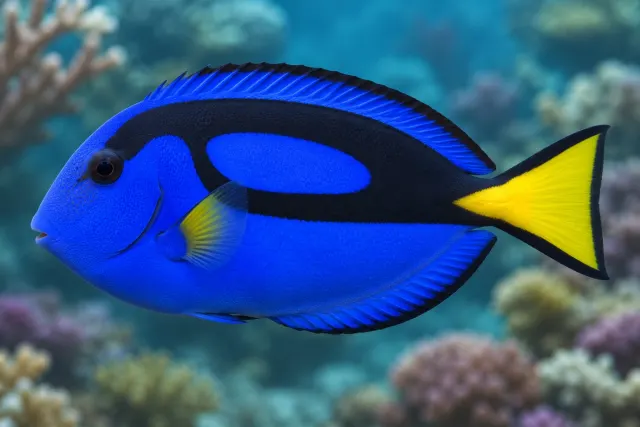
Electric blue, a bold black pattern and a yellow tail make the Blue Hippo Tang instantly recognizable. This active Indo-Pacific surgeonfish grows large and needs a long, spacious aquarium with rockwork for shelter.
Adult space, varied feeding and stable conditions make this a better choice for experienced keepers.
Recommendation
Would you recommend this fish for a suitable saltwater aquarium?
180+ galRecommended tank
12 inchesAdult size
Semi-aggressiveTemperament
With cautionCoral safety
+ Why you’ll love them
- Striking blue and yellow coloration.
- An active swimmer in a spacious reef aquarium.
- Generally compatible with corals.
- Accepts a varied diet with marine algae and meaty foods.
! Things to consider
- Needs at least a 180-gallon aquarium and generous swimming length as an adult.
- Can be prone to marine ich; quarantine and stable water matter.
- May show aggression toward other tangs.
- Has a sharp tail spine; handle carefully.
Tank and habitat
- Recommended volume
- 180 US gallons or larger; allow for stocking and layout.
- Full-grown size
- 12 inches (maximum adult size)
- Tank footprint and swimming space
- An aquarium at least 6 feet long, with unobstructed swimming lanes and sheltered rockwork.
- Tank maturity
-
6 months recommended
Established, well-filtered aquarium with stable water and grazing surfaces. Suggested tank age is a planning guide, not proof of readiness. Complete cycling, stable water and the right food supply are essential. - Habitat and equipment
- Open swim room, rock crevices, good water movement and a lid. Avoid handling its sharp tail spine.
Care and compatibility
- Temperament
- Semi-aggressive
- Why this care level
- Adult space, varied feeding and stable conditions make this a better choice for experienced keepers.
- Suitable tank mates and conflicts
- Suitable community fish; be cautious with other tangs, especially similarly shaped species.
- Alone, pair or group
- A single tang is simpler; multiples require specialist planning and substantially more space.
Corals and invertebrates
- Coral safety
-
With caution
Usually compatible; occasional picking is possible. - Shrimp safety
-
With caution
Usually compatible; small mobile invertebrates can be picked at. - Snail safety
-
Generally compatible
Usually compatible; monitor individual behavior. - Clam safety
-
With caution
Use caution: occasional picking at sessile invertebrates is possible.
Food and feeding
- Diet
- Omnivore; marine algae daily
- Feeding plan
- Supply marine algae and varied marine foods in several small feedings daily.
- Prepared or live food
- Algae sheets, suitable pellets and frozen marine foods; confirm feeding before purchase.
Water conditions
- Temperature
- 72-78 F (22-26 C); keep temperature stable.
- Specific gravity
- 1.020-1.025 specific gravity in the species care guidance; also meet your corals' needs.
- pH
- 8.1-8.4, with stable daily conditions.
Long-term care
- Lifespan
- A reliable typical captive lifespan is not established in the linked references. Plan for several years of care.
- Growth and future planning
- Adults can reach about 12 inches; plan for the full swimming footprint from the start.
Before you buy
- Is this fish right for your tank?
- Have the adult-sized aquarium ready. A tiny juvenile is not a suitable long-term choice for a small tank.
- Buying checklist
- Ask to see it eat; check its condition and plan quarantine.
User comments (0)