
Tangs · Acanthuridae
Care levelExpert
Finelined Tang
Acanthurus grammoptilus
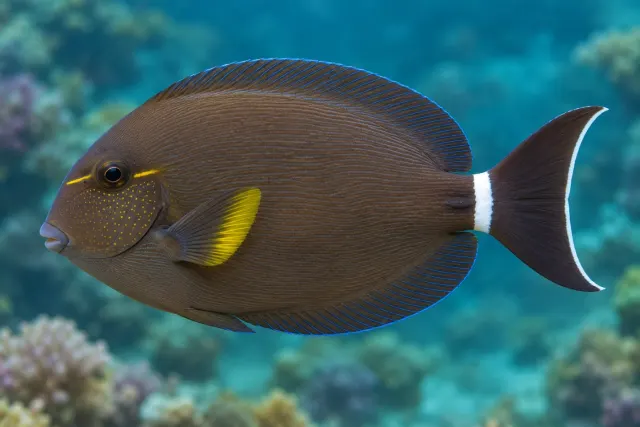
Fine fin lines, yellow eye-side accents, yellow outer pectoral fins and a pale tail-base band distinguish this brown surgeonfish. It is an uncommon aquarium species whose adult needs deserve specialist planning.
The 250-gallon figure is conservative Fish Match planning guidance. The linked natural-history source documents the species, not a tested aquarium minimum.
Recommendation
Would you recommend this fish for a suitable saltwater aquarium?
250+ galRecommended tank
14 inchesAdult size
Semi-aggressive / territorialTemperament
Generally compatibleCoral safety
+ Why you’ll love them
- Fine fin lines, yellow eye-side accents, yellow outer pectoral fins and a pale tail-base band distinguish this brown surgeonfish.
- Grazes marine algae as part of a balanced feeding plan.
- Generally compatible with corals when appropriately housed.
! Things to consider
- Needs adult-sized housing: plan for 250 US gallons or more with suitable swimming space.
- The 250-gallon figure is conservative Fish Match planning guidance. The linked natural-history source documents the species, not a tested aquarium minimum.
- Requires a consistent feeding routine and stable water.
- Has sharp tail spines; handle carefully.
Tank and habitat
- Recommended volume
- 250 US gallons or larger; allow for stocking and layout.
- Full-grown size
- 14 inches (maximum adult size)
- Tank footprint and swimming space
- Choose a long rectangular aquarium with open swimming lanes and room to turn. Leave space around rockwork; a tall narrow tank is a poor substitute for swimming length.
- Tank maturity
-
6 months recommended
Use an established, fully cycled aquarium with stable filtration and productive grazing surfaces. Confirm water stability and reliable feeding access before introduction. Suggested tank age is a planning guide, not proof of readiness. Complete cycling, stable water and the right food supply are essential. - Habitat and equipment
- Provide good circulation and gas exchange. Arrange secure rockwork for shelter and grazing, keep open water available, and use a secure lid. Take care around the sharp tail spines.
Care and compatibility
- Temperament
- Semi-aggressive / territorial
- Why this care level
- The 250-gallon figure is conservative Fish Match planning guidance. The linked natural-history source documents the species, not a tested aquarium minimum.
- Suitable tank mates and conflicts
- Many appropriately sized marine community fish may be suitable. Other tangs, especially similar-shaped species, require particular care and substantially more space.
- Alone, pair or group
- A single tang is the simpler plan. Keeping several requires additional space, individual assessment and a way to separate incompatible fish; wild groups do not establish an aquarium stocking rule.
Corals and invertebrates
- Coral safety
-
Generally compatible
Generally compatible with corals, but observe the individual. Algae grazing should not be mistaken for a guarantee that no picking will occur. - Shrimp safety
-
Generally compatible
Generally compatible with ornamental shrimp; monitor introductions and individual behavior. - Snail safety
-
Generally compatible
Generally compatible with snails. Continue observing grazing behavior around small invertebrates. - Clam safety
-
Generally compatible
Usually compatible, but individual picking is possible. Monitor clam mantles and other sessile invertebrates, especially if feeding is inadequate.
Food and feeding
- Diet
- Herbivore; marine algae and varied prepared foods
- Feeding plan
- Offer suitable marine algae and varied grazing-fish preparations, confirming acceptance and condition of the individual. Offer food consistently and check body condition; natural grazing is a supplement, not a complete feeding plan.
- Prepared or live food
- Marine algae sheets, suitable herbivore pellets and varied marine frozen preparations can be offered. Confirm the individual accepts the foods you can provide.
Water conditions
- Temperature
- 72–78 °F (22–26 °C) is a commonly published aquarium reference range. Maintain stable conditions and consider the needs of the whole community.
- Specific gravity
- Specific gravity 1.020–1.025 appears in common species-care guidance. Match the needs of corals and other inhabitants, and avoid abrupt changes.
- pH
- pH 8.1–8.4 is the published marine aquarium reference range used here; maintain stability rather than chasing a single reading.
Long-term care
- Lifespan
- The linked references do not establish a reliable typical captive lifespan for this profile. Plan for long-term care and maintain a realistic adult housing commitment.
- Growth and future planning
- Adults may reach about 14 inches. Growth depends on the individual and conditions; juvenile purchase size should not determine the long-term aquarium.
Before you buy
- Is this fish right for your tank?
- Confirm identification and an adult housing and feeding plan with an experienced marine specialist. The listed volume is editorial planning guidance; the linked biological sources do not establish a tested aquarium minimum.
- Buying checklist
- Ask to see the fish eat. Look for a well-filled body, clear eyes, intact fins and normal swimming and breathing. Plan quarantine and confirm the seller’s species identification and feeding routine.
User comments (0)